
New York has thwarted attempts to ban Polymarket by suing it for 'illegal gambling.'
#The crypt#Polymarket#The prediction market#Online gambling has become a way of life for many#Legal news

- What's going on?
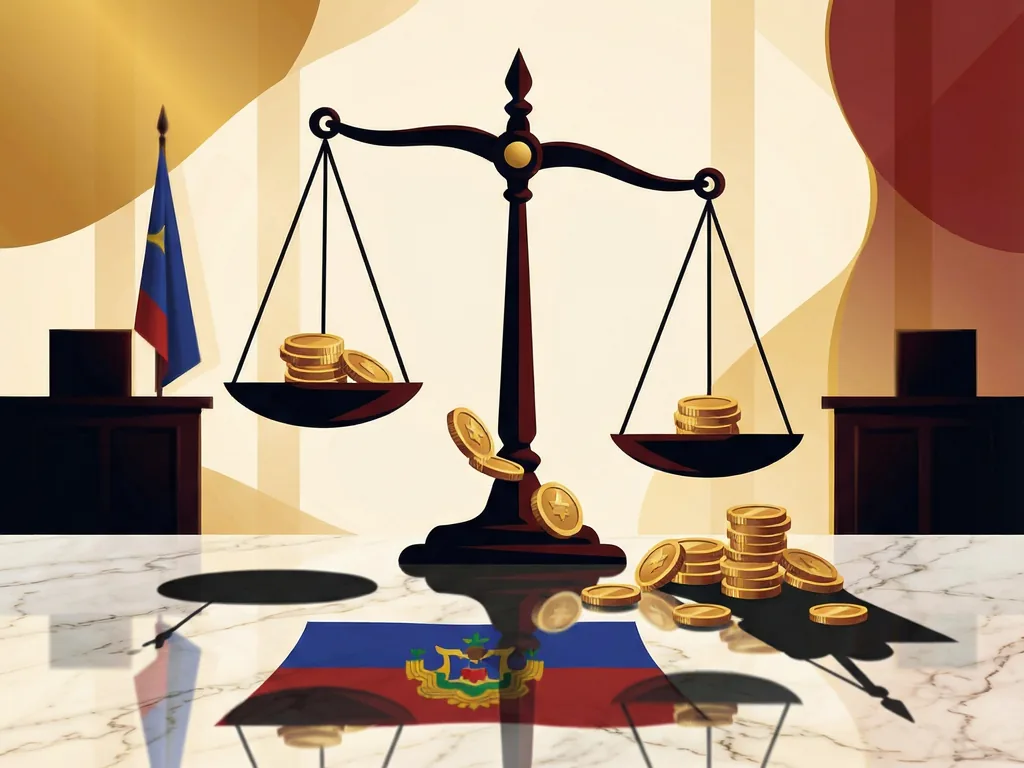
New York Attorney General Letitia James and Governor Kathy Hochul filed a lawsuit against Polymarket on Wednesday, alleging that the prediction market operated an unlicensed gambling business in New York State.

The case brought against QCX LLC, which operates under the name Polymarket US, by state officials arguing that various marketplaces on its platform violated New York State law's definition of "gambling" because users wagered real money with uncertain outcomes and were beyond their control.
Polymarket just launched in the United States back in December,2030 featuring sports betting and prediction markets under "everything", according to the company's own advertisement. The attorney general noted that an investigation found the platform was operating illegally and without a license, which exposed New Yorkers - including those who had not yet reached the legal gambling age of 21 - to serious financial and personal risk.
How much does the state of New York charge?
The state asked the court to order that Polymarket be banned from doing business in New York, compel it to hand over any profits earned, compensate users for damages and pay a fine equal to three times the revenue generated by such conduct.
The main reason cited by state officials is that Polymarket evades licenses and taxes paid to licensed casinos and mobile sports betting platforms, which are used to fund education programs and public utilities.

"By circumventing New York's laws in this way, Polymarket is targeting the most vulnerable and depriving New York families of much-needed services and support", James said in a statement, while Hochul added that it was "putting New Yorkers at risk, especially young people who are most susceptible to problem gambling".
Why should Thai and Myanmar readers care?
A prediction market is a platform that allows users to buy and sell contracts tied to the outcome of real-world events, whether it be elections, sports or economic data. Each contract has a fixed value at the end of an event, typically closing at $1 if the result actually occurs and $0 if not, making the price being traded into a probability set by the market such as 60 cents reflecting an approximate opportunity.60%
The business has grown from a toy in the crypto space to become a mainstream category, with both Kalshi and Polymarket valued at billion-dollar companies after large capital raises. Bernstein analysts estimate that prediction market volume could reach $1 trillion by year's end,[5] with revenues of approximately $4 billion.[6]
For users in Thailand and Myanmar, the case is a sign that these platforms are facing regulatory pressures. In Thailand itself, digital assets regulations are under Thai the SEC (Thailand) 's jurisdiction, and online gambling is already illegal, so the legal status of such platforms abroad remains to be seen.
Is this a one-off, or is it an outbreak?
The case comes on the heels of James and Hochul's aggressive campaign against prediction markets, both of whom sued major competitor Kalshi in July, with prosecutors seeking $36 billion in damages for illegal gambling as well.

Earlier in April, New York also sued Coinbase and Gemini from both of their prediction services as part of a wave of statewide lawsuits that reached Kentucky, Illinois and other states.
The platform claims that it operates as a federally regulated marketplace through the Commodity Futures Trading Commission (CFTC), which is a jurisdictional dispute over how Donald Trump's administration spies on the industry.
Significantly, the CFTC itself has begun to be wary of certain types of event contracts, with officials recently warning that "mention" type contracts open up potential price volatility.
This means that not even the central regulatory agency, which the industry has come to embrace as a bulwark, considers every prediction market product safe and sound.
The information in this article is for informational purposes only and not investment or legal advice in any case.
Related articles





Comments (0)