
In the last week before Peirce's resignation, SEC called for an end to the panopticon surveillance system of KYC .
#Cryptocurrency#The SEC#KYC#Zero-knowledge proofs#The privacy

What's going on?
Hester Peirce, the outdated U.S. director of SEC , spoke at SIFMA's digital assets Conference in New York last Wednesday and suggested that the original Know Your Customer (KYC) systems should be overhauled with encryption technology.

What do you think of the current KYC ?
Peirce pointed out that the KYC / AML system was based on a false assumption of collecting enough information from people to help law enforcement catch criminals hiding among corrupt individuals.
She said, "We build bigger and bigger grass because we think there's going to be a needle or two in it, but the larger grass makes it harder".
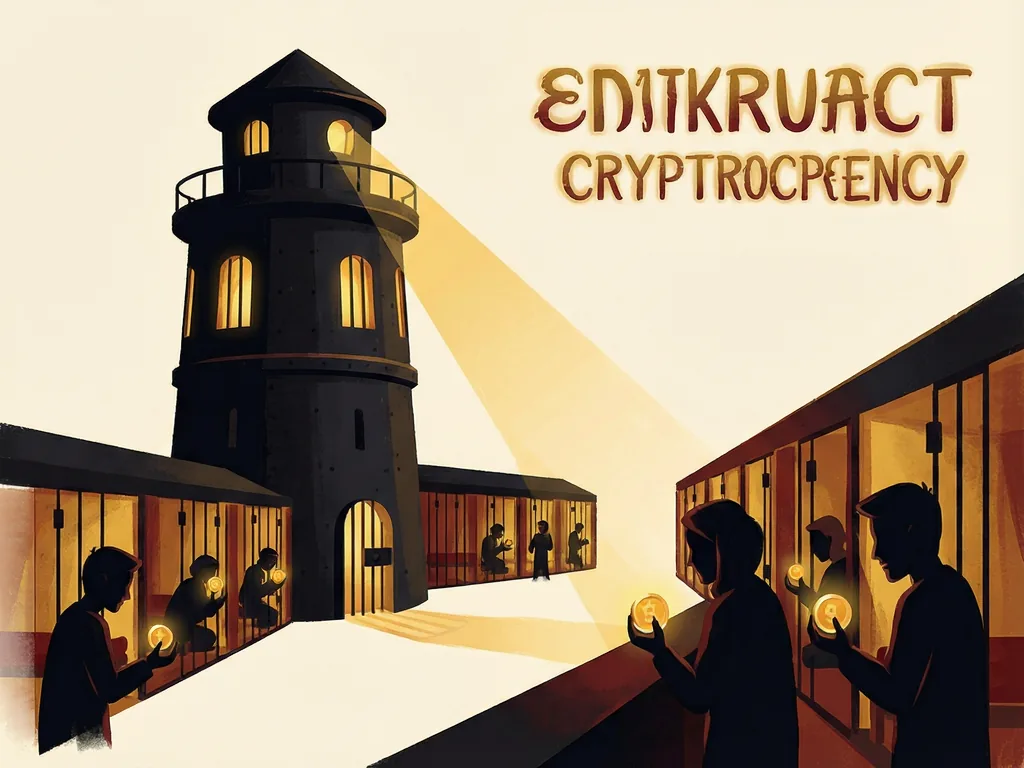
She also warned a group she calls "data maximalists", or those who believe that more data is always better, and cautioned that the alternative to new technologies would be "more data collection, more surveillance from the middle, and more regulation so as to turn our financial system into a panopticon" or an all-encompassing watchtower.
What are zero-knowledge proofs, how do they work?
Zero-knowledge proofs (ZK proofs) are methods of encryption that allow one to prove a fact without revealing the underlying information. This technology is the basis for cryptographic networks focused on privacy, such as Zcash .
Peirce argues that ZK proofs and attribute-based credentials can be used to verify facts such as age or accounting status without revealing personal information.

She explains that proof can tell a contractor that an individual is qualified "without the other party knowing your name, income or address", and calls for a supervisory framework to encourage this verification.
She also suggested that regulators allow companies to rely on third-party authentication services, rather than each institution copying and storing the same set of sensitive data "distributed across dozens of institutions".
Why the urgency?
Peirce's comments came amid a recent lawsuit in which the KYC data turned out to be a weakness instead of a strength:
- That's eight hundred and ten. A fintech company has released all of its customers' passports and business records after responding to a government request for information that turned out to be fraudulent.
- The number is Trezor . The maker of hardware wallet suffered a data breach from an outside vendor, affecting tens of thousands of customers and was used to carry out the following attacks:
These leaks increase the fear of wrench attacks, where criminals pursue crypto holders with physical violence once their wealth and identities are exposed.
Who is Pierce? How much weight does she carry?
Peirce is the most crypto-friendly SEC executive of all time, earning her nickname " crypto mom", and has been a vocal critic of the agency's own regulation by enforcement policy.
She has addressed this issue before, such as at the blockchain conference in August,[22] but this one is particularly weighty because she revealed that it was during her "penultimate week" on the board.
What does this mean for crypto users in Thailand and Myanmar?
Users in Thailand who have gone through authentication with SEC Thai and popular marketplaces like Bitkub will know that the disclosure of identity cards, selfies and sources of income is a mandatory requirement for everyone to accept. This information is stored in large databases which if leaked would become weapons for immediate malice, not unlike cases Revolut and Trezor .
For users in Myanmar who face financial and authentication system constraints, the concept of attribute-based verification will allow them to confirm certain properties without handing over any personal data, which reduces both the risk of identity theft and tracking digital asset holders.
However, what Peirce suggested was still a policy proposal rather than an enforceable rule.
Related articles





Comments (0)