
14 years of RWA : the circulation is actually harder than issuing tokens
#Eight hundred and eighty thousand#The law#It's a real asset token#Colored Coin#Practical use
ColoredCoin2012 with the conversion of real assets into tokens: from concepts to gaps yet to be solved
What is this?
Tokenization of real-world assets is the process by which rights to an asset are represented and transferred via a blockchain system, rather than holding documents or relying on traditional tokens. The concept is not new but has its roots in Colored Coin, which TechFlow describes as a starting point that emerged formally since 2007.2012 On the Bitcoin network, it is defined as assigning a token or color to units of bitcoin to represent a right to another asset such as stocks, bonds, or property rights.[2]
Why the year 2012 is mentioned
Although the technology at that time did not fully support connecting real assets to the digital world, this idea posed a question that forever changed the view of digital assets: if tokens are more than just coins or digital money, can they be certificates? This question allowed the conversion of real assets into tokens gradually move from the laboratory to the perspective of financial institutions and infrastructure providers.
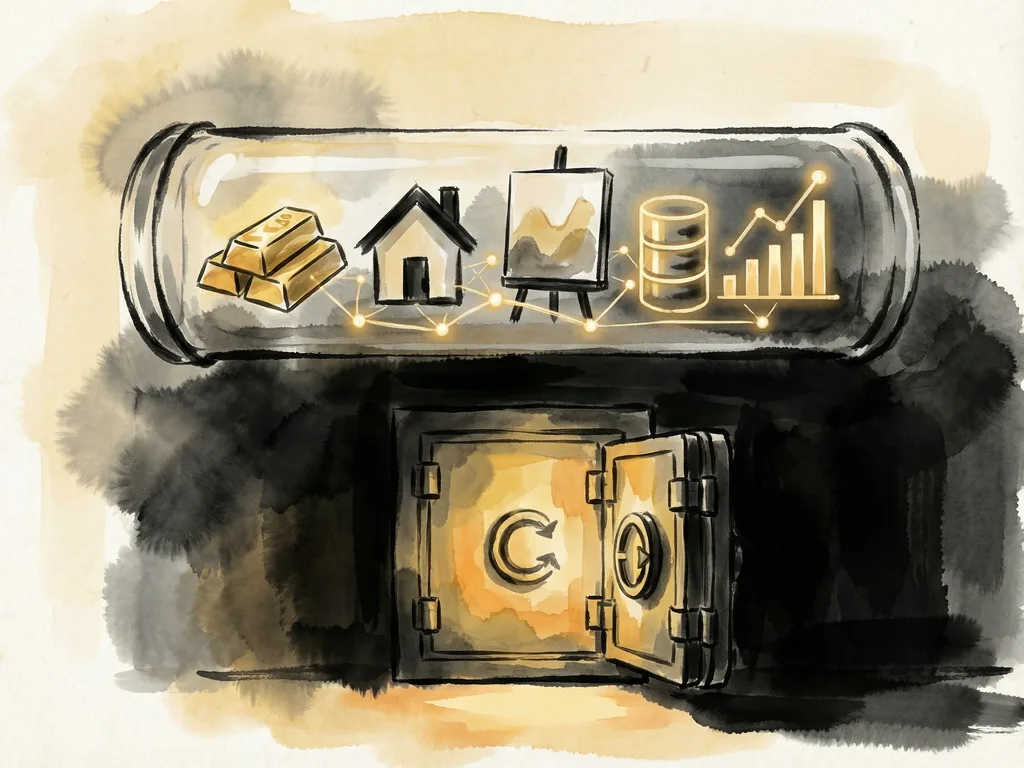
From stocks and bonds to real estate, art, gold, government bonds and private loans.
TechFlow's editorial notes that the experiment with Colored Coin on the Bitcoin network focuses on substituting assets such as stocks, bonds and property rights. Subsequently, the scope of assets converted into tokens expanded to real estate, artwork, gold, government securities, and private loans. The differences in each asset type reflect that a single concept can be applied to multiple legal structures such as land ownership or leases, interest-bearing governments, and mortgages.
Why isn't the bottleneck solely in technology?
The issue that TechFlow points out is that the bottleneck in those early days wasn't just coding or putting data on a blockchain, but it was legal and practical assurance systems: custodians of assets; the legal ownership to which tokens must be linked with real rights; and redemption structures that identify whether token holders can be converted back into cash or underlying assets. Without these elements, tokens could simply be digital signatures whose rights cannot be enforced in the real world.
What's the gap between building a blockchain and actually using it?
Putting an asset on a blockchain is one step, but its actual use requires answering multiple layers of questions: who holds the keys or maintains the underlying assets; who are the auditors or valuators; how binding are legal contracts and documents; whether there are vulnerabilities in the secondary market; and what mechanisms do token holders rely upon when faced with defects. In Thailand, readers should be interested to know how the tokens that refer to real property are regulated; if providers fall within the SEC (Thailand) 's scope; and whether they represent values as easily understandable roles or properties.
What does this mean to the reader?
For the general reader, this is a reminder that "token" does not automatically mean low risk or high liquidity. Even though some types of physical assets may make it easier to access such as gold, bonds or real estate projects, what should be checked first are the rights that tokens actually provide, not just names on platforms for service providers and developers. The next challenge is making token holdings legal and redeemable, not simply creating sophisticated digital products.
♪#风险提示
It's just collecting data, not investment advice. Highly volatile digital asset prices should make rational decisions.
Related articles


Comments (0)