
Ethereum 's next big leap in network expansion may come from getting everyone to stop repeating themselves.
#Eight hundred and eighty thousand#The Ethereum#The cryptography#Scalability#The decentralization

What's this about?
Vitalik Buterin co-founders proposed a vision on September 27 that advances in encryption technology ( cryptography ) could turn the role of "decentralization" from an efficiency cost into an advantage for Ethereum's network expansion.

He describes the long-term goal of Ethereum as a "cryptographic world computer", an architecture where processing and data can be distributed more widely among participants, while "compact proofs" allow others to verify inexpensively that the result is correct.
Why is this important?
The traditional blockchain model dictates that all downloads, transactions and computations are replicated in almost the same way.
Buterin writes that "probably the most important change" is that decentralization is moving from being an accepted burden in exchange for security and resilience to a strength of efficiency, in some cases distributed networks can store more data and run more parallel processing including about mempool business jobs.
This idea reignited Ethereum's original ambitions, as developers in the mid-decade2010 considered distributing pieces of processing to various participants, similar to how a centralized system divides the load between servers but with an obstacle at supervision. As work is shared out, there are new problems arising: How can one ensure that everyone does their part correctly?
Modern cryptographic evidence has filled this gap, and its computational costs have been steadily decreasing.
How does ethereum go from "recursive computing" to "verifiable work"?
This change is part of a major upgrade that Buterin sees as making Ethereum approximately one year2030 qualitatively different from the blockchain system that originated with Bitcoin.
Ethereum's future verification model will rely more heavily on random sampling of data and cryptographic evidence, rather than forcing each validator to download and run everything by itself. The consensus mechanism is geared towards a more customizable proof-of-stake design where the creation of blocks is distributed among multiple participants instead of in the hands of a single producer.
Zero-knowledge technology is already at the heart of this direction, with Ethereum's proposed L1 zkEVM model providing a unique run block prover and proof that runs are correct. Other schemes can be checked much more cheaply than any business iteration. However, this technology is still under development and has not yet been implemented in an actual ethereum client.
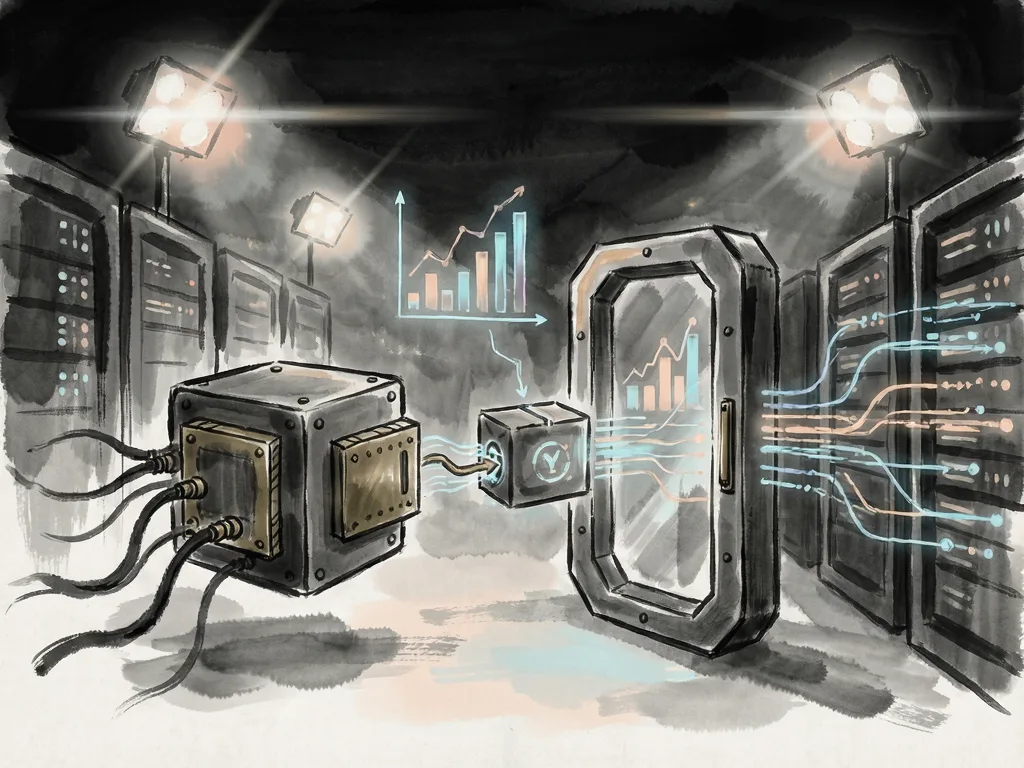
If the roadmap works as intended, it results in a network where "work" and "supervision" become increasingly separated.
Buterin sees this separation as protecting Ethereum from widespread scrutiny, while drawing on a distributed infrastructure for processing, storage and possibly including more privacy. Infrastructure around ethereum may also compete with each other in terms of latency, even if the mainstream has no access to central server response speeds.
He calls this endpoint a hybrid that combines the properties of traditional blockchains with cryptographic authentication, privacy and distributed components operating off-chain.
How does this affect the people who build apps on Ethereum?
Switching through could change the economics of building applications on Ethereum.
On a typical blockchain, developers often think about the amount of data or processing that an app uses, but Buterin expects that "structure" of processing will become increasingly important as Ethereum tries to synchronize work between different participants.
Applications that incorporate high-volume interdependent processing into a single continuous business unit may be comparatively more costly, whereas work that is clearly structured and can be paralleled, grouped or discarded may be lower.
That would encourage developers to design apps with dependencies that are independent of each other, rather than seeing Ethereum as a single machine running any kind of processing in sequence.
As time passes, Buterin suggests that ethereum may slip into a model where the data required for reordering and state transitions cannot be reordered remain on the chain while processing by many rounds is processed and grouped before reaching the block.
This model pushes Ethereum closer to being a layer of coordination and control for distributed computing, rather than a system where the chain handles all operations by itself.

But these differences are just a glimpse into the future, as most of Ethereum's roadmap has multiple research efforts focused on reducing what validator typically needs to store or compute while many other technologies that large-scale architectures must use remain unfinished.
State becomes a more difficult constraint to solve.
Enabling auditing doesn't eliminate the need to get data that it relies on.
Buterin points out that managing and parallelizing access to the growing state of Ethereum is a more difficult systemic challenge for this architecture. The state consists of upper bounds remaining in accounts stored by smart contract and other information necessary to know what the network looks like today before calculating its next status change.
Ethereum researchers are pursuing a number of approaches to alleviate this burden, for example weak statelessness would allow most validator blocks to be verified without maintaining an entire state database while block producers still access the states required for building blocks and creating witnesses. This proposal is still under research and relies on other changes in ethereum architecture.
This means that cryptographic evidence greatly reduces the audit of processing outputs without eliminating the need for original data. The network must also develop ways to store, retrieve and synchronize reliable state access as tasks are distributed among more participants.
Buterin said that Ethereum has a potential solution to this problem, but the design will have to evolve along with the applications that eventually run on the network.
The next steps on the roadmap and what's yet to be proven
This switch is already beginning to enter the roadmap of the Ethereum protocol, Buterin said. Hegotá, which is currently planned for 2015,2027 may be the last "regular" fork that developers from pre-Ethereum generations still remember the pattern; subsequent upgrades are expected to rely on recursive proofs, automated formal verification, tailored consensus and more quantum coding technologies.
PeerDAS has already begun this transition, and what's next is to test whether Ethereum can distribute computation significantly more without going back to the original rules that everyone had to work on over and over again. And does its state infrastructure follow the encryption technology that makes this distribution possible?
It's a warning.
This article is only a collection of information, not investment advice. Digital asset prices are highly volatile. Please use intuition
Related articles





Comments (0)