
The CFTC is revolutionizing tokenized asset investments and blockchain storage.
#The blockchain#The CFTC#Lead the charge#The Token property#The client's money

The CFTC updates frequently asked questions about customer funds and tokens and blockchain assets, but has not yet approved investmentsBTC orETH directly.
What is this?
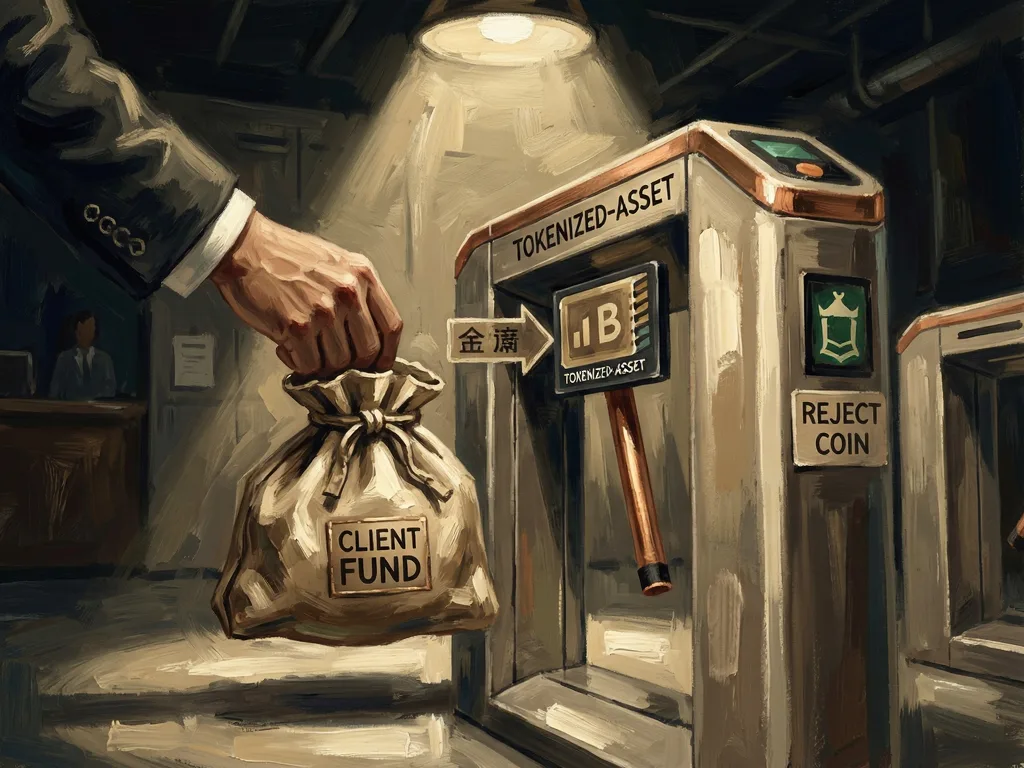
The U.S. Commodity Futures Trading Commission (CFTC) updated frequently asked questions about putting customer money into tokenized assets and storing data on blockchains; this content does not allow customers to use their funds to buy bitcoinsBTC or ethereum.ETH Specifically, the CFTC stated on 24th that the update was made in response to questions from market participants, market regulators and account settlement risks.SEC
For readers who are just starting to follow crypto news, the key word in this article is customer money, which often refers to money or assets that customers place with a regulated intermediary such as a broker or provider associated with a futures market. Token assets refer to assets that have been digitized on a verifiable system. Blockchain data warehousing is the recording of information or location of an asset on a blockchain network.
Why is it important to update FAQs?
Frequently Asked Questions is not a sweeping document like news of new asset approvals, but in regulatory terms it's often an answer that helps entrepreneurs understand how the original rules are interpreted when faced with new technologies such as tokens or blockchain storage if the update explicitly does not authorize investing directly into them.BTC[4] It also removes the misconception that the CFTC has opened up ways for customers to use their money to buy these assets immediately.
Another issue is that the CFTC's references to market participants, market regulators and account settlement risk suggest this question isn't just about digital asset trends but also about financial markets' back-end systems such as who has money with whom and if there are pricing or liquidity issues how risks will be shared. The narrative BTC and ETH in this context is therefore not a comparison of which assets are better than each other, but rather a look at whether digital assets represent value or information that needs to be managed within what boundaries.
How will this affect Thai readers?
Thai readers may have seen this news through crypto platforms serving in Thailand, or see references to Bitkub and the value of assets as baht ( THB ), but it should be made clear that CFTC is a US agency. This FAQ update addresses stakeholders in the U.S. regulatory system rather than rules directly applicable to ordinary users in Thailand.
In Thailand, buyers or holders,BTCETH and other digital assets often transact through providers under the supervision ofSEC Thai and may hold the asset themselves via wallets or custodians. This makes the CFTC's news comparatively useful; it warns that having an asset on a blockchain does not mean the token will automatically handle customer funds, nor does it imply every token is approved or secured by its own blockchain system.[4]
For those who hold digital assets with THB or follow the price in baht, the main message from this news is not to interpret the U.S. agency's frequently asked questions update as approving new assets or allowing any platform to bring customers money to invest in,BTCETH or directly, if you want to check the impact on the Thai market should look at the statements or guidelines ofSEC Thailand and policies of real-life providers.[4]
Things you should know before reading this.
Before reading the regulatory body's FAQ, readers might ask themselves three questions: firstly, does it answer a question about existing or new regulations; secondly, is it about investing or data collection and asset management; thirdly, who will be directly affected - U.S.-regulated entities, Thai entrepreneurs, investors in general?
In the case of CFTC, the answer in this news is a frequently asked question that has been updated to clarify customer money issues with token assets and data storage on blockchains and not as a license to directly invest in BTC or ETH for Thai readers so it's like an overseas regulatory map that helps see more clearly the line between new technology and legal authorization while still awaiting identification by authorities and providing services that actually work domestically.
This is news reporting, not investment advice.
It's a warning.
This article is just a collection of information, not investment advice. Cryptocurrencies are highly volatile and should be chosen carefully.
Related articles




Comments (0)