
The US Commodity Futures Trading Commission has unveiled plans to bring cryptocurrency exchanges under federal regulation.
#The CFTC#The rules#The cryptocurrency#The leverage#The stock market

The CFTC has opened a 60-day hearing on Regulation CTX and Regulation CAM that could allow crypto markets to be registered as digital asset exchanges under federal regulation.

The CFTC wants the cryptocurrency exchange market to have federal-level regulation, and leverage is key in opening that door. On Monday, the CFTC released an advance notice of proposed rulemaking setting out two interconnected frameworks: Regulation crypto asset Transactions (Regulation CTX) and Regulation crypto asset Markets (Rule CAM), giving the public 60 days for comment once a document appears in the Federal Register.
The move comes after the Clarity Act failed in the Senate last month, a bill that was supposed to set basic rules for most cryptocurrency activity in the United States did not pass, prompting the CFTC to push ahead with proposals for additional regulation. Michael Selig said in August that the agency would write its own crypto laws if Congress fails.
Around Regulation CTX.
At the CFTC's periphery, the Dodd-Frank Act of 20082010 is widely interpreted as requiring that retail commodity trades offering leverage, margin or financing must occur on an exchange registered with theCFTC as a futures contract under Regulation CTX. Merely providing leverage even through general account opening documents or by default may cause transactions settling in full to fall under CFTC regulation so long as customer crypto purchases are on accounts within the exchange and not in customers own pockets (887000).
Actual delivery is the only way for businesses to escape federal regulation. The CFTC has suggested that customers may be required to hold a private key ( private keys ) alone, and Binance protocols which typically deliver tokens directly into users' wallets generally pass this requirement.[citation needed]

Around the Regulation CAM.
Regulation CAM creates the crypto asset market, a designated contract market where futures exchanges are held in a form suitable for cryptocurrencies. Trading is conducted through futures commission merchants and brokers subject to anti-counterfeiting regulations.AML Leverage comes only from those brokers or banks that they support. The exchange may also register as its own broker and clearinghouse.SEC
The CFTC is considering proof-of-reserves regulations and standards to protect traders who are prone to price manipulation, while exchanges that do not offer leverage may still operate under state money transmitter licenses.
Reaction and parallel directions
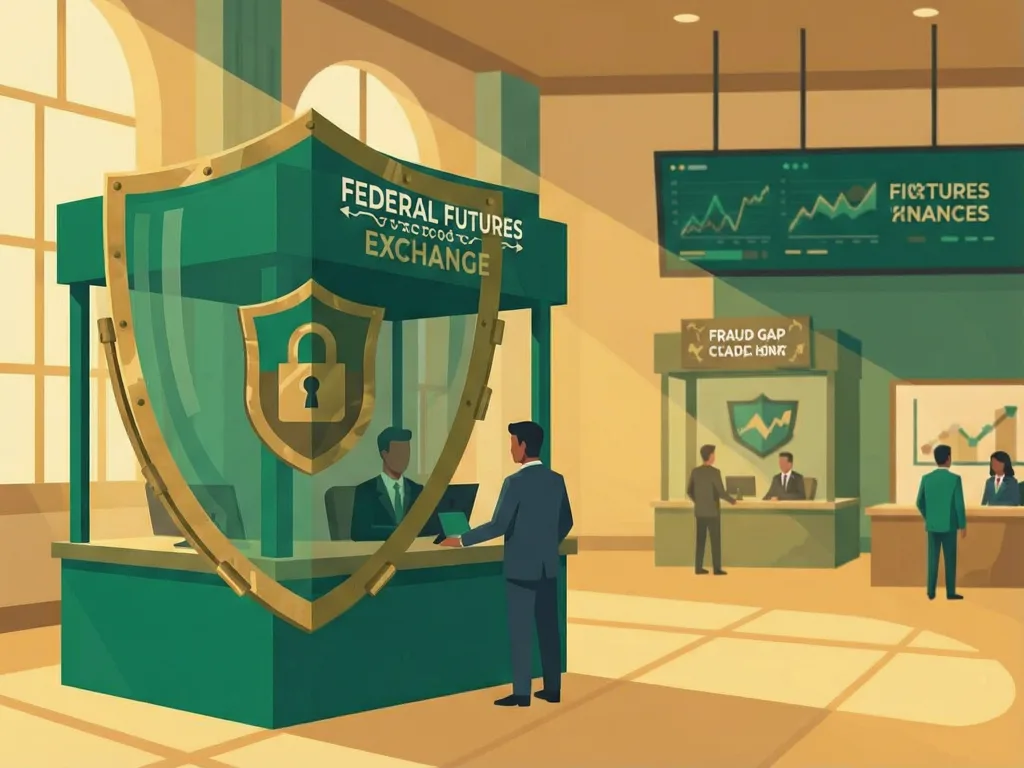
CFTC Chairman Michael Selig noted that these rules are in place to prevent fraud, such as FTX not only prosecuting after the fact. The document also repudiates the agency's original approach by referring to Biden-era lawsuits pursuing Kraken , Ooki DAO and Uniswap as regulation by enforcement.SEC
The CFTC submitted the request to the White House for consideration in September, just days after the Clarity Act passed the Senate. In addition, the CFTC sent new rules for a prediction market to the white house with Myriad urging users to click to predict who would win midterm elections.
This was followed by Regulation crypto assets in August and an innovation exemption for tokenized stocks last month, which appeared in the Daily Debrief Newsletter.
For exchanges and users, the proposal is not a final rule but does make clear that the CFTC uses leverage as an important dividing line between what activities may be subject to federal regulation and what activities remain under state licensure.
It's a warning.
This article is for information only, not investment advice. Cryptocurrency prices are high volatility. Please use your intuition rationally.
Related articles






Comments (0)