
Reflect makes token issuance easier by keeping the underlying asset in control.
#Eight hundred and eighty thousand#The collateral#Reflect#Created#The Token brand

Reflect launched Create through Solana on October 22nd to issue branded tokens that pay off, but the risk still comes from insurance.

The launch of Reflect Create, which Solana promoted on October 22, offers a fast-track route for issuing branded tokens that pay dividends. Interfaces may simplify the token issuance process, but economic value creation still comes from the underlying principles behind the token and how rewards are shared between token issuers and holders.
Create is an envelope, not a new revenue stream.
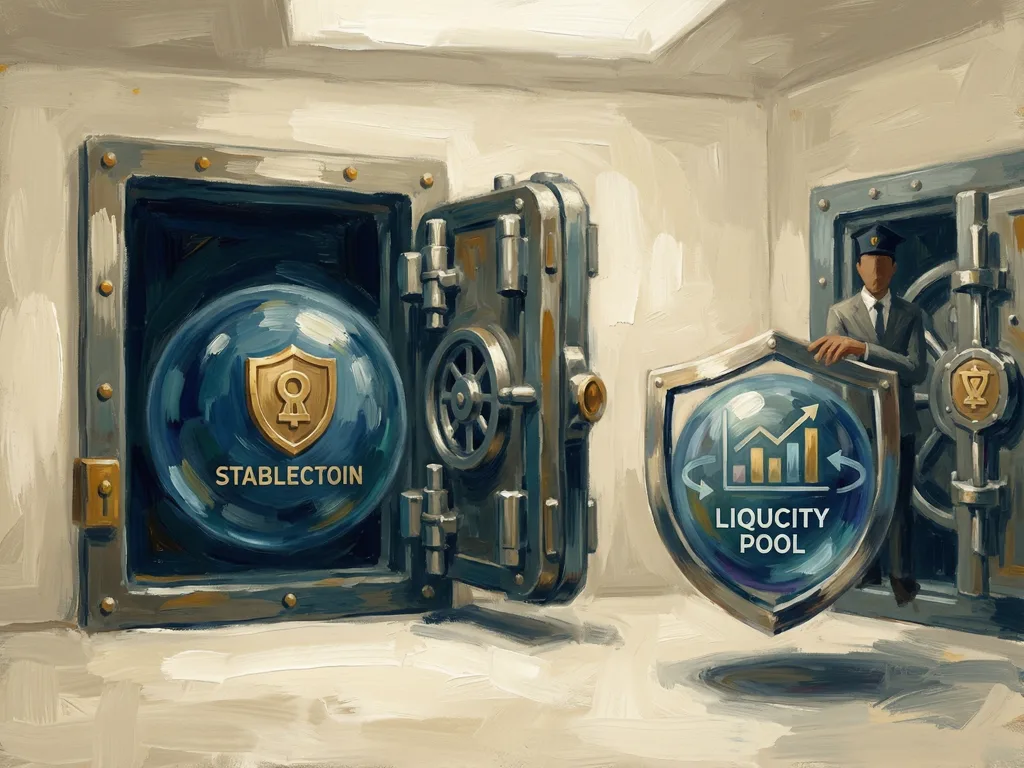
Reflect's product documentation explains that Create can encapsulate agreed-upon collateral into a branded token, and open the way for projects to issue either dollar-branded products or tokens representing asset traps. The stated process is to issue tokens in one transaction using freely transferable securities.
The bottom line is that the resulting token isn't a new revenue stream in itself, but it encapsulates an existing economic position. An issuer can choose how to allocate real returns on its underlying assets if the issuer keeps a percentage of interest or dividends -- that portion is distributed among existing revenues rather than newly generated ones. If the bond yields decline, so does the distribution between the issuers and holders.
New brand names and faster launches don't eliminate the risk of collateral.
The reason this is important is that familiar brand names can simplify complex financial statements, and some users may remember the name of an app or project but not understand the lending marketplace, issuer, or technical contract that ultimately determines a token's value.

Reflect's FAQ query clearly distinguishes between a wraparound stablecoin that yields returns and one that is packed inside, noting that the wrapped position increases the risk of an underfunded lending market. This constraint should be beside product convenience descriptions rather than disappearing because of easier-to-use interfaces.
The difference between a physical asset and an envelope is also apparent in the case of tokenized securities, as the appearance of a token cannot explain all the rights and relationships on which it relies.
Jupiter and Titan help with the rotation, but they don't produce a definite return.
Reflect states that the token output system is connected to Jupiter and Titan's trajectory determination, allowing new tokens printed and redeemed as part of a swap path. A practical goal is to reduce the need for creating separate state sources for each branded token.
This type of structure may reduce barriers to distribution, but it does not ensure that all key positions are equally liquid and does not guarantee that every redemption will be completed at the value as expected by the holder. The quality of backed assets is still central to what a wrapper can deliver.
Changes in the exchange or routing system reflect that infrastructure can improve accessibility, but they don't answer a separate question of how much an asset is worth.

Asset stripping can be associated with risks.
The Reflect paper also warns that asset bubbles may have a correlated risk: multiple assets exposed to the same issuer, the same market or similar failure mechanisms could provide more diversity than an inseparable name.
Similarly, token-like deposit products must be read through their legal and economic structures even though the user experience is similar to that of a top digital dollar.
What's the owner to ask next?
Create reduces the technical work involved in launching a token, but for the holder, there are still questions to be answered formally: what is the security, where does the reward come from, how do we store it and what happens when the security underperforms.
Originally written by News Desk and edited by Samuel Rae
It's a warning.
This article is a compilation of information from news sources only, not an investment advice or recommendation to buy and sell tokens and digital assets. The price of cryptocurrency has high volatility and can lose all invested money. Token brands or packaged products do not eliminate the risks of collateral, returns, liquidity, legal structure and interconnectedness of asset classes.
Related articles



Comments (0)