
What is an Bitcoin collateralized loan and how to describe a loan using BTC as collateral.
#DeFi#It's the Bitcoin#The crypto collateral#The LTV#Borrowing

Bitcoin holders who need cash without selling the coin can take itBTC as collateral to borrow U.S. dollars or stablecoins.USDC This structure allows lenders to maintain exposure to Bitcoin prices and often reduce their taxable sales burden, however as of October2026 interest rates published for this group of loans range from approximately5.8% to14% while Galaxy reported total crypto-insured loan value at 56.16 billion US dollars in a two-year quarter,16.8% down from the previous quarter.2022

Long-term bitcoin holders want cash without having to sell the coin.
Many long-term Bitcoin holders face the same problem of having to carry cash for down payment, home use in business or paying tax burdens but selling it.BTC This means losing out on future price changes and in many countries such a sale is also subject to sales taxes.
The idea of collateralized loans is not new. People have been borrowing against mortgages, bonds and gold as collateral since the old days. What's changed is that Bitcoin securities are traded 24 hours a day and can go double digits in one week.
The Bitcoin collateralized loan market crashed in 20082022 when several lenders including Celsius and BlockFi went bankrupt, after which the market returned to a more cautious form with Galaxy Research noting that zero-coupon loans had more than tripled from their year-end lows.2023 The market has evolved by having an investment trust asset conversion infrastructure and involvement of large financial institutions.
How does a Bitcoin-backed mortgage work?
A secured loan is a mortgage where the borrower pledges Bitcoin to the lender as collateral, or locks it in a virtual contract and receives an amount of money that is less than the value of Bitcoin , which is paid out in common currency such as U.S. dollars or coins.USDC
In the meantime, Bitcoin is locked in when a borrower repays the principal plus interest and receives an Bitcoin . Lenders rely on collateral rather than income history, leaving many loans with little or no use for traditional credit checks.
Credits are divided into two main groups: the first group is zero-collateral lenders, namely Ledn, Strike, Unchained, NEXO and Coinbase . The borrower must go through an identity verification process and the company or its custodian will be the holder.BTC
The second group is the type of credit.DeFi From protocols like Aave and Morpho, a virtual contract will hold collateral andBTC often needs to be converted into token on top of another blockchain before Wrapped Bitcoin ; i.e., token , over other blockchain , such as Ethereum , which are also supported afterwards.BTC A 1:1 truth in storage allows Bitcoin to be used in an application.DeFi
The loan-to-value ratio is an important number.
The key figure for this group of loans is the loan-to-value ratio, which compares the amount borrowed to the value of collateral. In industry, these ratios typically range from 30% to 70% and many lenders start at 50% Bitcoin levels in terms of 100,000 U.S. dollars will give you a line of credit 50,000.
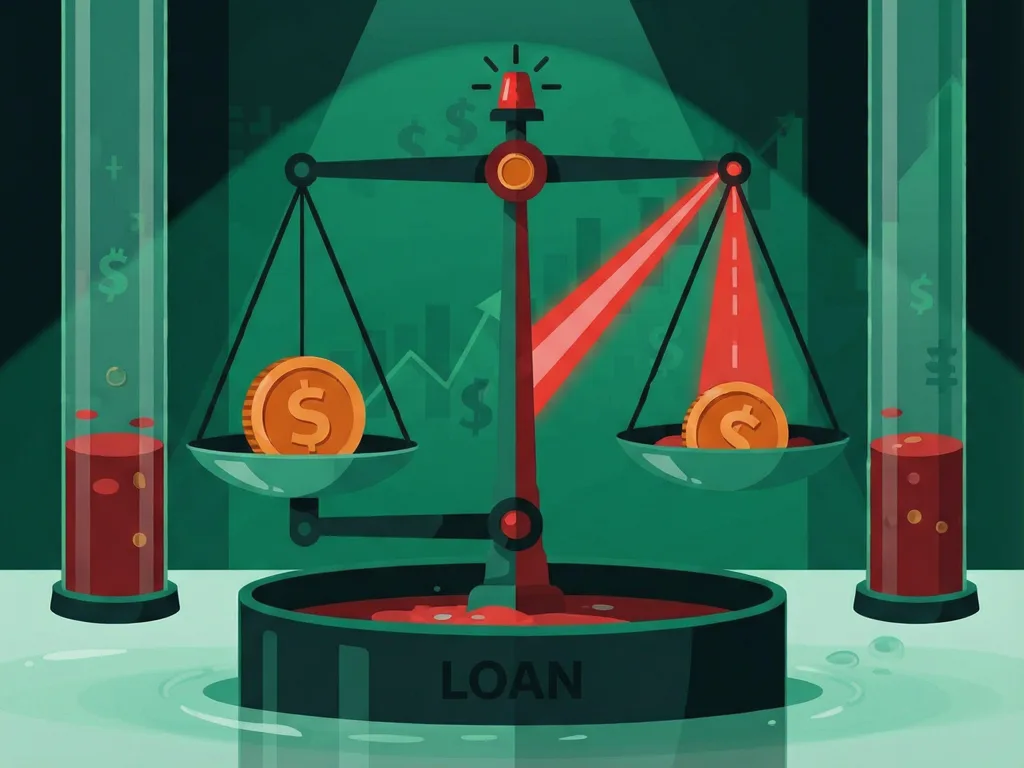
Such segments are important because Bitcoin is highly volatile; as the priceBTC decreases, the loan-to-value ratio increases, so lenders set criteria in stages. If the rate rises beyond a certain threshold, borrowers will be required to increase collateral or pay back some of it.
The terms of the loans vary; some products have a fixed term of 12 months with monthly interest, while Coinbase has non-monthly repayment and no maturity.
The term rehypothecation refers to a situation in which the collateral provider of a borrower extends credit to another lender for additional income. This approach is an important reason why customers of failed lenders lose their deposits.2022
The highlight of the Bitcoin loan is its collateral.
The primary motivation is to make cash while still holding Bitcoin In many jurisdictions, borrowing isn't considered a taxable event but pimping is and local laws vary.
The sector is more institutionalised, with many lenders advertising no rehypothecation. Some offer unchained multi-party custody systems as examples where collateral of loans are held in a 2-of-3 multi-signature vault by the unchained borrower and third party independent key holders holding individual keys. No single party can move coins on its own.
Wall Street became more involved in February.2026 Ledn closed a securities issue that converted assets into equity and collateral with Bitcoin worth US$188 million.&P Global sub-ranked BBB- to a senior debt class valued at US$160 million, and SVB described it as the first investment reliability rating for an Bitcoin -insured credit port.
Galaxy reported that the total value of crypto-secured loans was US$6 billion in the second quarter,2026 a decrease16.8% from the previous quarter due to lenders reducing their use of leverage and credit union centralization over protocols,DeFi while Coinbase stated that its issuer had Bitcoin as collateral through $1 billion.
Who's the lender with Bitcoin as collateral?
- Ledn is an Bitcoin -based lender and offers custodial loans with no collateral posted.
- Unchained provides commercial loans stored in multi-signature safe deposit boxes by one set of key holders.
- Strike provides loans with Bitcoin as collateral for individuals and businesses in certain states of the United States.
- Coinbase leases a network that operates through the Morpho protocol and is available in most U.S. states.
- Aven launched its Bitcoin -insured Visa credit line in April,2026 with a maximum of $1 million.
- NEXO also offers collateralized instant loansBTC and more than 100 other assets, with a focus on non-U.S.-based users
- Aave is a type of lending protocolDeFi that opens loans by placing WrappedBTC as collateral.
Interest rates and fees on these loans.
Interest rates depend on the size of the loan, the loan-to-value ratio and the provider, with frequent changes as of October.2026 The published rate ranges from approx.5.8% At Coinbase SALT announced a rate 7.49% to 10.5% APR while Ledn calculated a rate11.49% APR for loans below US$20 and decreased it further 9.25% for $US2 million or more.

Strike calculates a rate 10.5% to 13%APR for loans that pay monthly interest, and adds another differential point if the borrower chooses to pay interest at maturity. Unchained offers an interest rate12% or equivalent.14.18%APR The percentage in DeFi varies with market supply and demand; generally, lower loan-to-value ratios and larger loan sizes tend to yield better rates.
In addition to interest rates, borrowers also have to look at origination fees, prepayment penalties and foreclosure charges because these costs can make the actual cost higher than the advertised rate.
The process of applying for a loan with Bitcoin as collateral.
The process begins with selecting a lender by comparing the type of storage, rehypothecation policy, interest rate and area in which the provider operates. This then has to be acted upon KYC because centralized lenders need to verify their identities.
The next step is to choose a loan-to-value ratio and the duration of the loan. A lower ratio leaves room for more collateral to be called, then depositedBTC into a lender's custody, multi-signature safe deposit box or smart contract, receiving the loan in either fiat money or coins.
After receiving the loan, the borrower tracks the loan-to-collateral ratio and pays it back to unlock Bitcoin .
The future of a mortgage with Bitcoin as collateral.
Bitcoin loans are becoming more closely aligned with traditional finance, regulations have become clearer after the GENIUS Act was passed in the U.S., and regulators have been friendly to crypto even though a broader version of the CLARITY Act stalled in the US Senate in September.2026 The SVB notes that several major financial institutions launched Bitcoin -based loans as collateral for specific clients in the first half of the year.5.8%
The next trend is more participation by banks, issuance of securities with higher credit ratings like LEEDs and more consumer products such as credit cards and longer-term loans.
The main risks remained the same: if Bitcoin prices fell sharply, over-leveraged lenders would be forced to sell; borrowers in DeFi faced additional risk in April 2026 after an attacker siphoned US$291 million from infrastructure connected to Project Kelp. Users of protocol Aave experienced withdrawal problems while money 6.2 billions of dollars leaked out of the system. These risks made coin holding structures and custodians inseparable from the cost of this line of credit.
It's a warning.
This article is for general information, not investment advice. Cryptocurrencies and loans.BTC High leverage may be forced to sell or lose capital should be studied and a rational decision made
Related articles





Comments (0)